
Nusa Penida has a way of making a camera feel almost unnecessary and completely essential at the same time. The island’s limestone cliffs, turquoise water, rugged coastline, and dramatic viewpoints create scenes that seem ready-made for photography. Yet capturing Nusa Penida well is not simply about visiting famous viewpoints and pressing the shutter. The island rewards travelers who slow down, observe the light, and pay attention to how the landscape changes throughout the day.
Located southeast of Bali and separated from the mainland by the Badung Strait, Nusa Penida is considerably more rugged than many of Bali’s better-known tourist areas. Its dry hills, steep coastal cliffs, secluded beaches, and offshore rock formations give the island a distinctive visual character.
For photographers, that combination creates opportunities ranging from wide landscape compositions to intimate details of coastal life.
Why Nusa Penida Is Special for Landscape Photography
The most obvious attraction for photographers is the coastline.
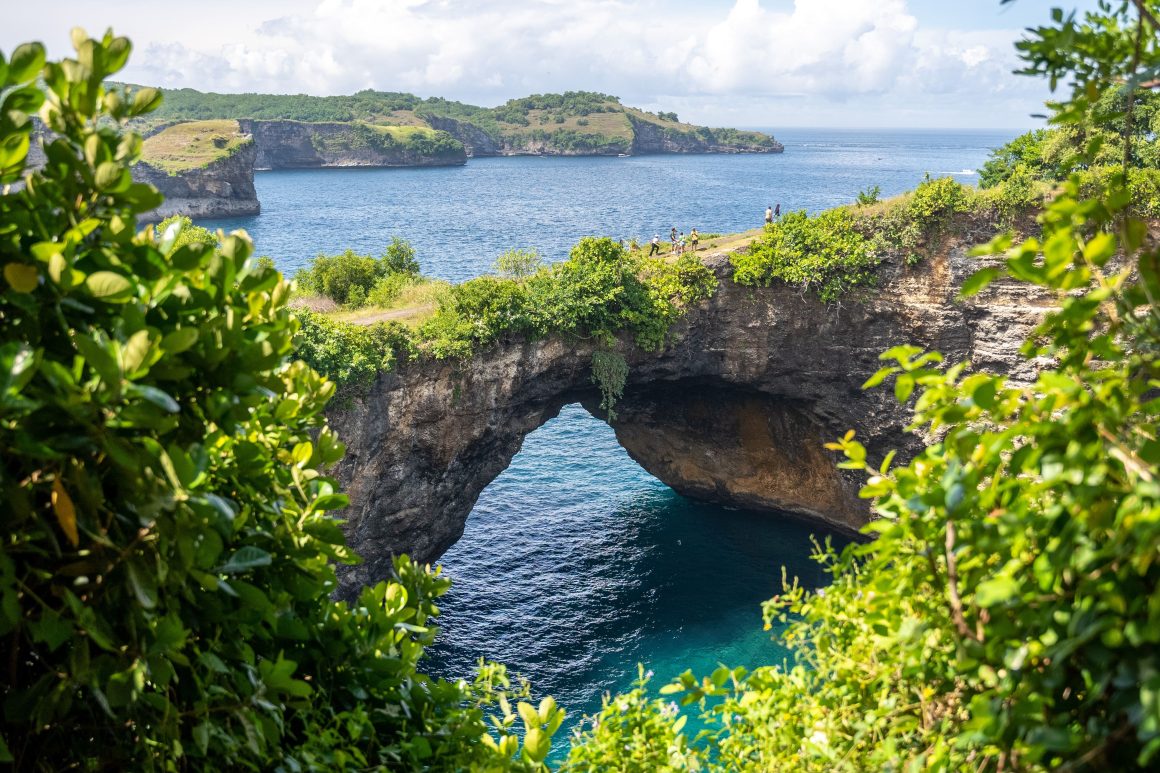
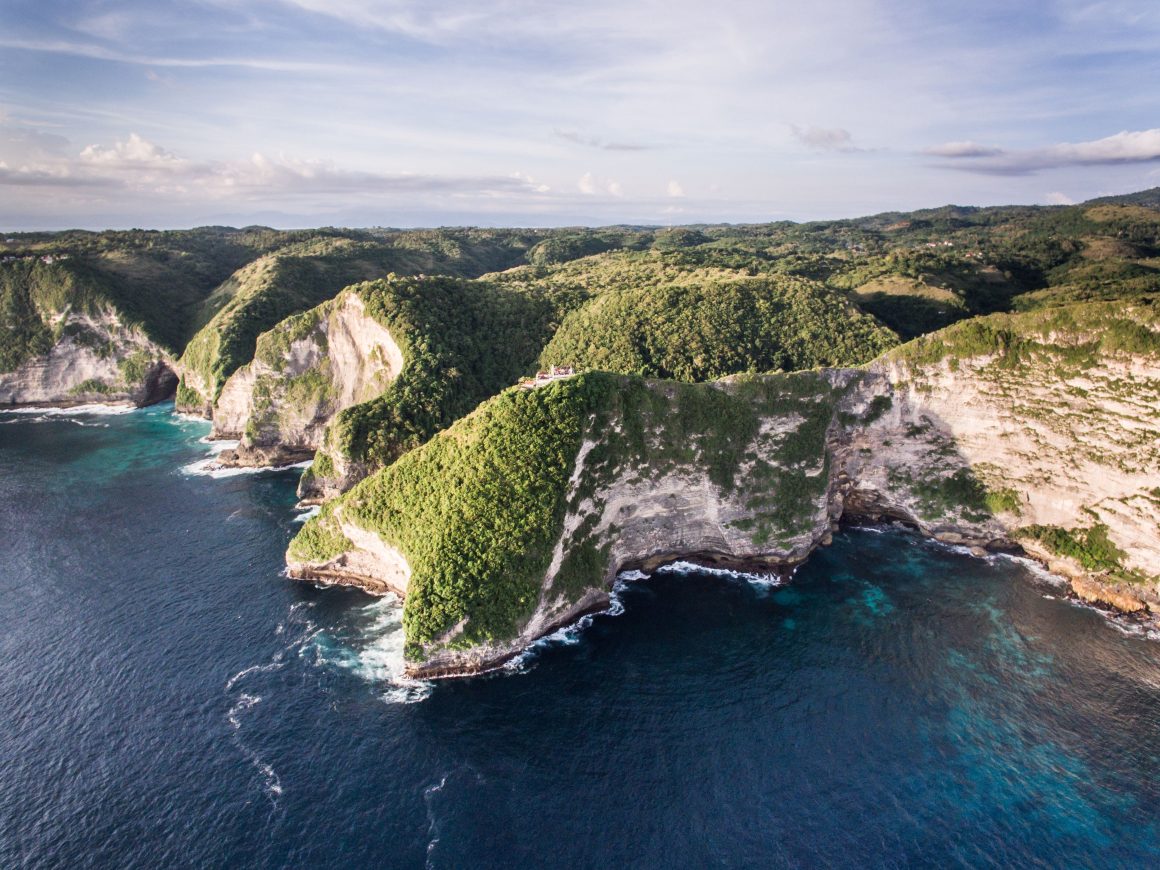
Large sections of Nusa Penida are defined by cliffs rising above the Indian Ocean. In some locations, the cliffs form dramatic curves around small beaches, while elsewhere they drop almost vertically toward the water.
This changing elevation creates natural layers in photographs. A foreground cliff can frame the ocean, a distant headland can create depth, and passing clouds can add movement to an otherwise static composition.
The island also has a relatively dry landscape compared with the lush interior of Bali. During the dry season, grasses can turn golden and create a completely different visual atmosphere from the greener conditions experienced during wetter months.
This seasonal contrast is worth considering when planning a photography trip.
Kelingking Beach: Photographing a Famous Landscape Differently
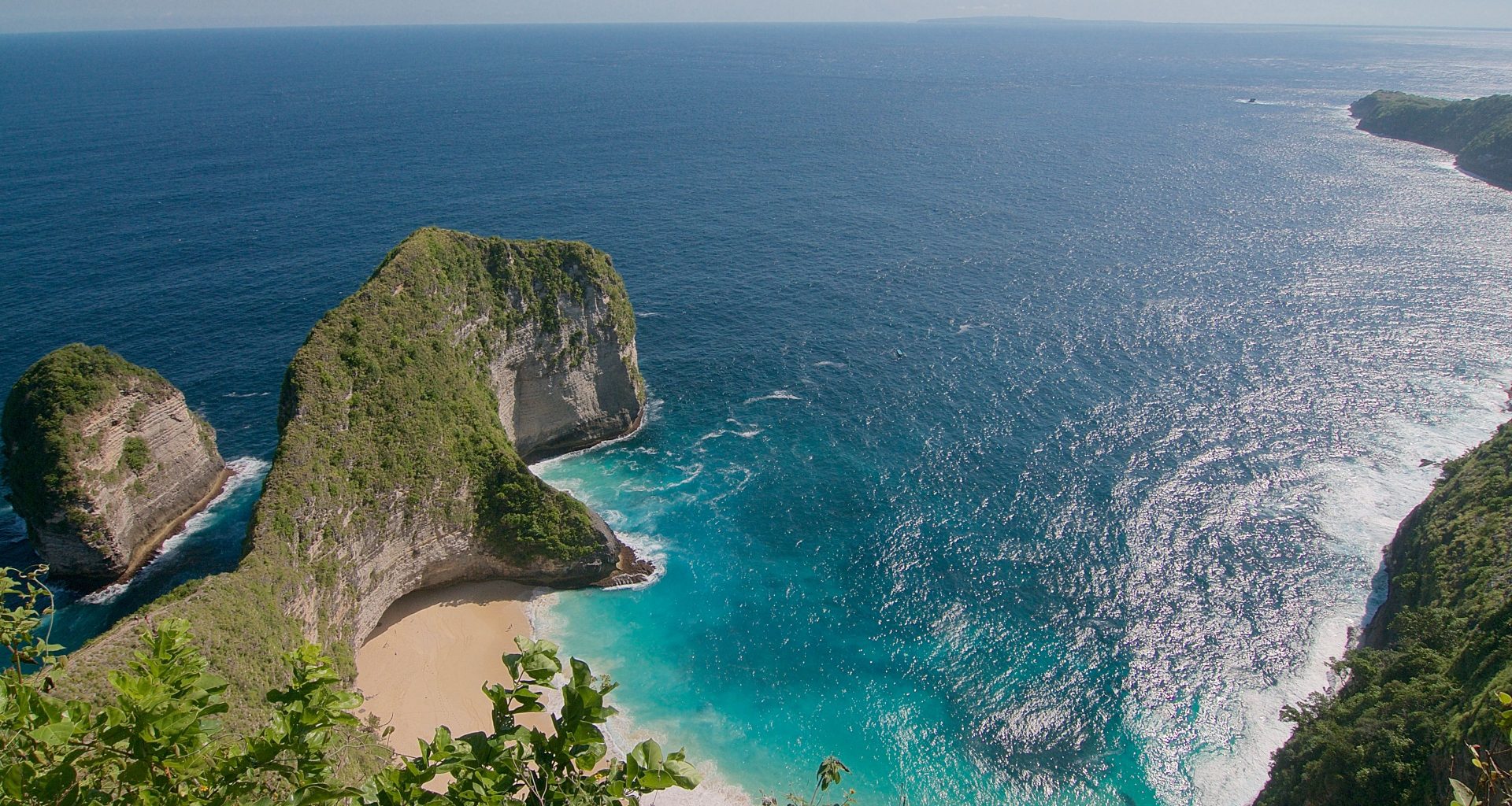
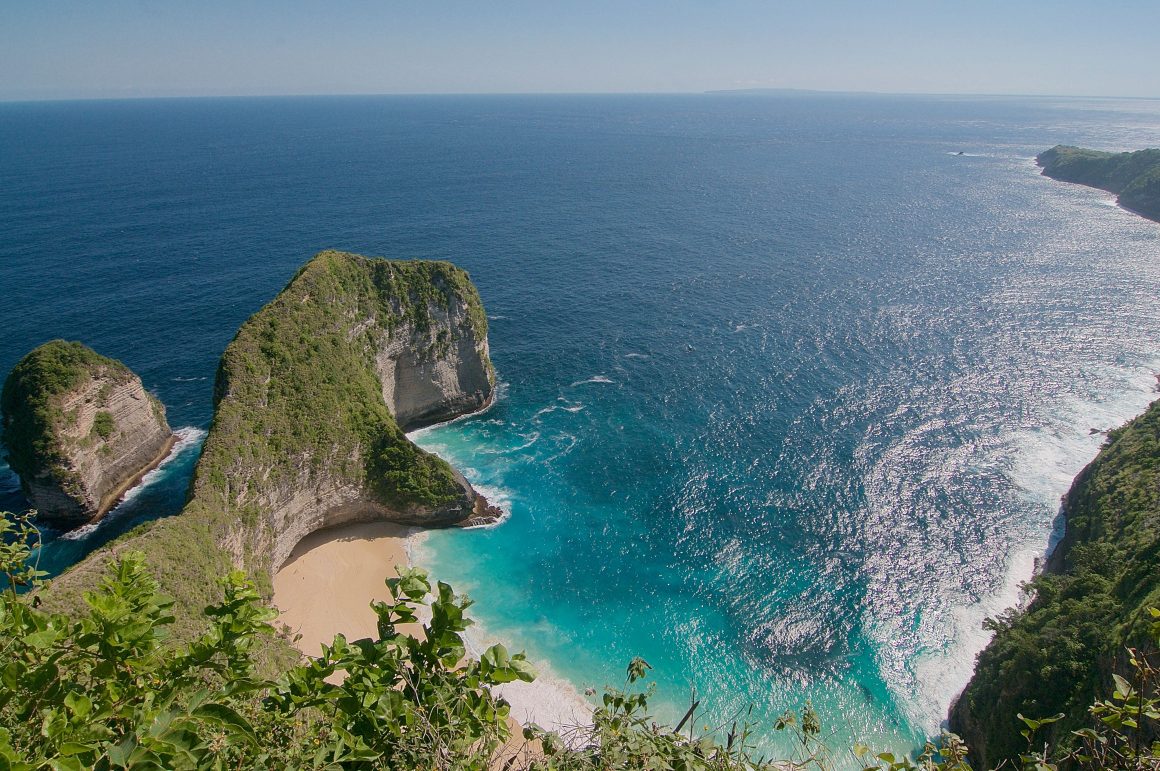
Kelingking Beach is arguably the most recognizable landscape associated with Nusa Penida.
Its cliff formation resembles the shape of a Tyrannosaurus rex when viewed from above, while the narrow beach below is surrounded by towering limestone walls and deep blue water.
Because the viewpoint has become extremely popular, simply photographing the same scene as everyone else may not produce a particularly distinctive image.
Instead, look for alternative compositions.
Try including vegetation or the edge of the cliff as a foreground element. Pay attention to people standing along the viewpoint because they can provide a sense of scale. On days with interesting cloud formations, leave more space in the frame to emphasize the atmosphere above the ocean.
The important lesson here is that a familiar destination does not necessarily require a familiar photograph.
Broken Beach and the Power of Natural Geometry
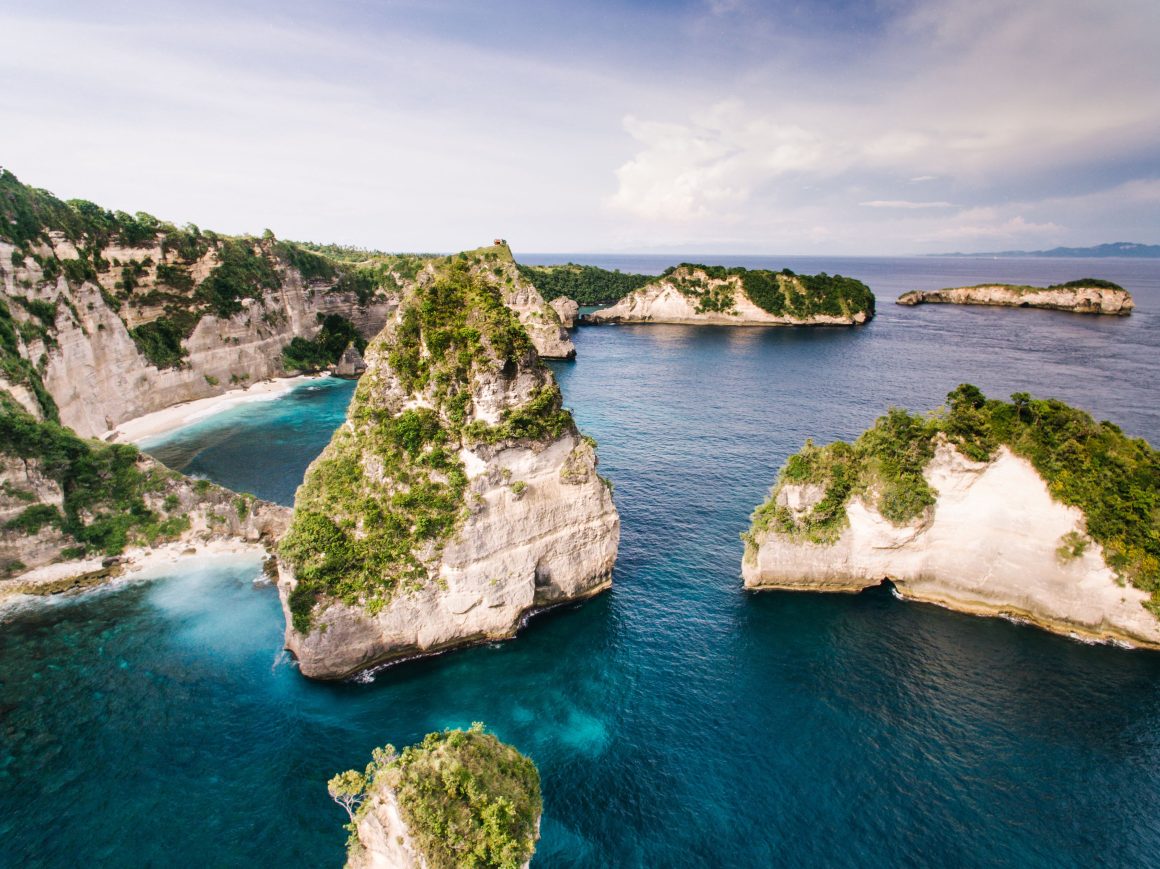
Broken Beach, locally associated with Pasih Uug, offers a completely different photographic opportunity.
The most recognizable feature is the enormous natural arch that allows seawater to flow into a circular coastal formation. From above, the geometry of the cliffs becomes particularly striking.
This is an excellent place to experiment with shapes and patterns rather than relying entirely on conventional landscape composition.
Look for the relationship between the circular coastline, the blue water, and the surrounding limestone. A wider composition can communicate the scale of the formation, while a tighter frame can emphasize its unusual structure.
Photography at places like this is a reminder that geology itself can become the main subject.
Angel’s Billabong and Coastal Details
Not far from Broken Beach is Angel’s Billabong, a natural rock pool situated along the coast.
The attraction here is not only the water but also the textures created by volcanic and limestone rock, tidal movement, and natural erosion.
For photographers, these smaller details can be just as valuable as the large panoramic views.
Instead of photographing the entire landscape every time, look down.
Patterns in the rock, reflections in shallow water, seaweed, small pools, and changing textures can produce more intimate photographs that complement the larger landscape images in a travel collection.
However, the ocean around Nusa Penida can be unpredictable. Coastal rocks can become slippery, and waves can reach areas that appear safe from a distance. A good photograph is never worth ignoring basic safety.
Crystal Bay and the Importance of Timing
Crystal Bay is another well-known destination on Nusa Penida, particularly for travelers interested in snorkeling and marine experiences.
From a photography perspective, the location offers a combination of beach, vegetation, rocky formations, and open sea.
The quality of the photographs can change significantly depending on the time of day.
Early morning generally provides softer light and can produce calmer-looking images. Late afternoon can create warmer tones, while changing cloud cover can dramatically affect the color and contrast of the sea.
Rather than asking only, “Where should I take photographs?”, consider asking, “When will the landscape look the way I want it to look?”
That small change in thinking can improve a photography itinerary considerably.
Photographing Nusa Penida From the Sea
One of the easiest ways to see Nusa Penida from a different perspective is to photograph the island from the water.
The coastline looks very different when viewed from sea level. Cliffs that appear relatively simple from a viewpoint can reveal layers, caves, rock formations, and changing colors when approached by boat.
For travelers who want greater flexibility in exploring the coastline, a nusa penida private boat tour can also make the journey itself part of the photography experience. Instead of seeing the sea only as a means of reaching the island, photographers can use the boat ride to observe coastal formations, changing perspectives, and the relationship between the cliffs and the ocean.
This perspective is particularly useful for photographers who want images that go beyond the standard viewpoint photographs found in most travel galleries.
How to Photograph Nusa Penida Without Overcomplicating Your Gear
Nusa Penida does not require an enormous collection of photographic equipment.
A camera with a wide-angle lens is useful for capturing large landscapes, especially around the island’s cliffs. A standard zoom lens can provide greater flexibility when photographing people, details, and distant coastal features.
A smartphone can also perform surprisingly well in these conditions.
The more important consideration is protection.
Dust, saltwater, strong sunlight, and sudden rain can all create problems for photographic equipment. A dry bag or waterproof protection is useful when traveling near the coast, particularly when moving between locations by boat.
A microfiber cloth is also worth carrying. Sea spray can quickly leave small droplets on a lens, and these may not become obvious until the photographs are reviewed later.
The Best Light for Nusa Penida Photography
Light can transform the appearance of the island.
During the middle of the day, sunlight can be extremely strong. While this produces bright turquoise water and sharp contrasts, it can also create harsh shadows.
Early morning is often more forgiving for landscape photography. The lower position of the sun can create longer shadows and reveal the texture of cliffs and vegetation.
Late afternoon provides another opportunity for warmer and softer light.
But there is no single “best” time for every photograph.
A dramatic cloudy morning may produce a more memorable image than a perfectly clear sunrise. Likewise, strong sunlight can sometimes work beautifully when the goal is to emphasize the vivid colors of the sea.
Good photography is therefore less about following a rigid schedule and more about recognizing favorable conditions when they appear.
Respect the Landscape While Photographing It
Nusa Penida’s dramatic scenery can make it tempting to move closer to cliff edges or enter restricted areas to obtain a more unusual composition.
That is not worth the risk.
The island’s coastal cliffs can be extremely steep, and conditions can change quickly. Wet surfaces, strong wind, unstable edges, and powerful waves require caution.
Photographers should also avoid damaging vegetation, climbing fragile formations, or disturbing local wildlife simply to create a particular image.
The best travel photographs do not need to come at the expense of the destination being photographed.
Beyond the Famous Viewpoints
One of the most rewarding aspects of photographing Nusa Penida is discovering that the island is much larger than its most recognizable locations.
Roads pass through villages, dry hills, agricultural areas, and stretches of coastline that receive considerably less attention than famous viewpoints.
These ordinary scenes can provide some of the most authentic images.
A motorcycle passing through a village, a fisherman preparing equipment, sunlight falling across a hillside, or a quiet stretch of road can tell a different story about Nusa Penida.
Instead of treating the island as a collection of tourist attractions, photographers can approach it as a living landscape.
That perspective often produces a more complete travel story.
Creating a Nusa Penida Photography Story
A good collection of travel photographs should not consist entirely of spectacular landscapes.
Try building a visual sequence.
Start with an establishing photograph that shows the wider environment. Follow it with images of the coastline, people, local details, transportation, food, and smaller moments between destinations.
Then return to the larger landscape.
This creates visual rhythm.
For example, a photograph of a massive cliff can be followed by a close-up of weathered limestone, then a portrait of a traveler, followed by the ocean viewed from a boat.
The result feels more like a journey than a collection of disconnected tourist photographs.
When Is the Best Time to Photograph Nusa Penida?
There is no single perfect month for every photographer.
The dry season generally provides more predictable weather and clearer conditions, which can be useful for coastal and landscape photography. The wetter period can bring greener vegetation and more dramatic skies, although rain and cloud cover can make travel conditions less predictable.
The choice ultimately depends on the type of images you want.
For bright coastal landscapes and clearer visibility, more stable weather may be preferable. For moodier landscapes with clouds, reflections, and greener scenery, changing weather can sometimes work in your favor.
Rather than chasing perfect weather, photographers should be prepared to adapt.
A Different Way to Remember Nusa Penida
The most memorable photograph from Nusa Penida may not necessarily be the one taken at its most famous viewpoint.
It could be the moment when sunlight breaks through clouds above the ocean. It could be a fishing boat appearing tiny beneath a massive cliff. It could be a quiet road disappearing into the hills or the texture of limestone illuminated by late afternoon light.
That is what makes Nusa Penida interesting for photographers.
The island provides spectacular scenery, but it also offers countless smaller visual stories between the famous destinations.
Take time to look beyond the obvious. Change your perspective. Photograph the journey as well as the destination. Most importantly, allow the landscape to determine the photograph instead of forcing every scene into the same composition.
Nusa Penida is at its most interesting when experienced as more than a checklist of viewpoints. For photographers, it is a place where geology, ocean, weather, culture, and everyday life come together to create a constantly changing visual story.


